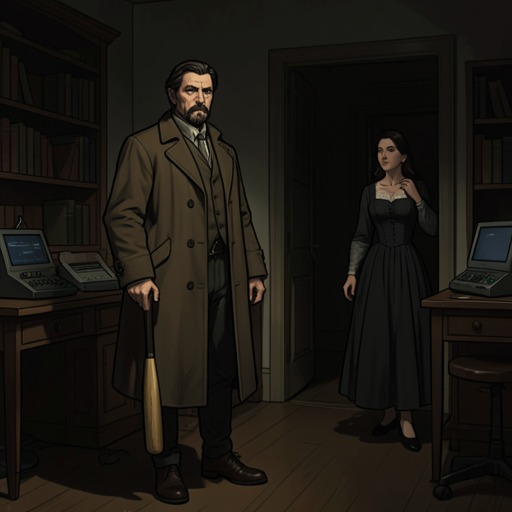
Noboru Wataya
The Wind-Up Bird ChronicleNoboru Wataya is Kumiko Okada’s elder brother, a former academic who turns into a conspicuous media personality and an ambitious politician. His rise in public life stands in stark contrast to the private violence and control associated with him: Creta Kano identifies him as the man who violated her, while Toru Okada confronts him over his influence on Kumiko and their marriage. The contrast between a polished public image and damaging private power makes Noboru a central antagonist in Toru’s effort to understand and recover his wife.
Identity and public ascent
People who knew Noboru, including Toru and Kumiko, had once regarded him as a high-strung academic absorbed in his specialty, not as someone suited to public performance. That impression changed when his writing brought magazine attention and television appearances. He became a regular panelist on a political debate program, and his ease before cameras appeared to exceed his ease in ordinary life. His public presentation was carefully composed, including expensive suits, coordinated ties, and fine tortoiseshell eyeglass frames.
The transformation quickly became political as well as media-driven. After Noboru was elected to the House of Representatives, his name appeared frequently in newspapers as a columnist, television commentator, and rising politician. A women’s magazine poll named him the country’s most popular politician. His growing recognition made him an attractive prospective candidate in a district seeking a young, energetic representative who might gain influence in the central government. Supporters expected his name to draw younger voters and relied on a strong local organization to compensate for his limited ability to cultivate voters personally.
Family and private harm
Noboru’s place in Kumiko’s family gives his public and private lives a direct bearing on Toru. When Toru learns that Mrs. Okada’s elder brother is Noboru Wataya, Malta Kano clarifies that Noboru had sought her advice about the missing cat after Kumiko consulted him. The family connection thus enters the story first through an apparently ordinary matter, before becoming entangled with the couple’s separation and the disclosures surrounding Noboru’s conduct.
Creta Kano names Noboru as the man who violated her. She explains that, years later, she recognized him when she encountered him again as a client of Malta Kano’s; the earlier encounter had made him impossible for her to forget. In a separate recollection, she describes being sent to a hotel room where a client named Wataya was waiting. When she saw Noboru again at Malta’s home, a glimpse of him in the entryway was enough to freeze her. She says that she does not want him to remain the last man who bought her services, linking her wish to the lasting sense of violation caused by what he did.
Kumiko’s own disclosures further complicate the family relationship. She tells Toru that she once opened a door and saw her brother masturbating. She also reports that Noboru has called her about his political prospects and describes the pressure for him to run for office. These details place her not merely as the sister of a rising politician but as someone with intimate knowledge of him, knowledge that sits uneasily beside his cultivated public image.
Confrontation with Toru Okada
When Noboru meets Toru after Kumiko’s disappearance, he presents the separation as already settled. Speaking across a table with an untouched glass of iced tea, he says Kumiko has left with another man, that the marriage should end, and that the Wataya family’s position is final. He portrays the practical steps as simple: a lawyer will prepare the papers, and Toru need only sign them. Noboru also says he does not know where Kumiko is and would not tell Toru even if he did, because she does not want to speak with her husband. His formulation treats Kumiko’s absence as a decision that Toru must accept, while Noboru claims authority to announce what the family considers its conclusion.
Toru rejects that framing and challenges the distance between Noboru’s polished public persona and what Toru says he knows about him. He tells Noboru that he will not make a deal with him and that he intends to recover Kumiko himself. The confrontation turns their antagonism into an explicit contest over who may define the marriage and act in Kumiko’s name. Noboru speaks as though the matter can be closed by family consensus and paperwork; Toru insists that the conflict cannot be reduced to a settlement and refuses to let Noboru’s social position dictate his response.
Political leverage and the proposed bargain
Noboru’s rising career gives his private dealings with Toru a public stake. Years after the confrontation, Ushikawa introduces himself as Noboru’s employee and describes his work as handling matters that remain out of public view. In particular, he has been assigned to deal with Kumiko, whom he emphasizes is Noboru’s only sister. His account places the family dispute within a broader effort to manage Noboru’s interests through intermediaries rather than direct contact.
Ushikawa says Noboru is no longer opposed to Toru and Kumiko potentially resuming their relationship, although Kumiko herself does not presently want that. He offers to serve as a channel for communication and presents this change as a reopening of diplomatic relations. The offer is conditional in context: Ushikawa also raises a magazine article about the reputedly cursed Hanging House and warns that further attention could connect Toru’s property to Noboru at a politically delicate moment. Noboru, he says, fears the public scandal such a connection might produce as his political career gathers momentum.
The proposed solution is that Toru sever his ties to the land and withdraw from the deal. Ushikawa argues that trying to suppress the article would be dangerous and might attract more attention, then presents Noboru’s preferred alternative as a financial arrangement. When Toru refuses to abandon the property, Ushikawa offers eighty million yen, enough to pay off Toru’s loan and leave him with the remainder. The scale and neatness of the sum make the offer sound like a clean exit; its purpose, as Ushikawa describes it, is to detach Toru from a place whose association with Noboru could become politically damaging.
Toru rejects both the proposed reconciliation and the payment. He says he will get Kumiko back himself, not with Noboru’s help, and tells Ushikawa not to enter his house again without permission. The refusal preserves the conflict as more than a dispute over property or public relations: Toru will not accept Noboru’s money as the price of relinquishing his own course of action.
The conflict’s continuing reach
Noboru’s importance to the story persists beyond his direct confrontations with Toru because his public stature and private conduct keep converging around the question of who controls Kumiko’s life. Toru understands Noboru as a polished public figure concealing a damaging private self, and tells him that both he and Kumiko know what lies beneath the television-ready mask. The warning is also a claim that private knowledge could be brought into public view, challenging the assumption that Noboru’s reputation and influence make him untouchable.
The novel also complicates any simple account of Noboru’s hold over his sister. He calls Kumiko as his political prospects are advancing, and she tells Toru that supporters want him to run because he is young, energetic, recognizable, and potentially capable of becoming a major force in the central government. Yet her account of having once opened a door and found him masturbating, together with Creta Kano’s disclosures, places disturbing private knowledge beside that political promise. The contrast does not resolve into a public scandal in the supplied events; instead, it sharpens the divide between what Noboru can present to voters and what those closest to him remember.
Noboru’s name reaches even into the domestic space Toru shares with a returned cat. Toru concludes that the real Noboru has become too great a presence for the animal to keep bearing his name, especially after Noboru’s election to the House of Representatives. The proposed renaming is a small but deliberate effort to separate an ordinary, tangible creature from the politician’s expanding symbolic presence. In that gesture, the struggle against Noboru’s influence becomes part of household life as well as the larger conflict over Kumiko and the Hanging House property.
Kumiko’s final message gives the conflict its starkest consequence. She says she is going to the hospital to kill her brother and accept punishment, and explains that she no longer hates him; she believes the act must be done for his sake as well as to give her own life meaning. The statement transforms the sibling relationship from a source of concealed knowledge and coercive pressure into a decision with irreversible consequences. The later question of whether Kumiko was released from jail confirms that she remains imprisoned. Noboru’s arc therefore reaches the reader not through an account of his final condition, but through the life-altering act Kumiko attributes to their history and the punishment she accepts afterward.
Narrative role and significance
Noboru is both a character and a force of mediation: he is the absent husband’s powerful brother-in-law, the subject of Creta Kano’s testimony, the politician whose reputation makes the Hanging House a potential liability, and the employer behind Ushikawa’s approach to Toru. His reach is often conveyed through other people’s accounts rather than through sustained access to his inner life. In the direct encounter with Toru, he speaks in the language of finality, family consensus, and practical paperwork; through Ushikawa, his interests appear as discreet employment, political caution, and a large financial offer. The shifting channels make his power feel distributed across institutions and intermediaries, even when he is not present.
That structure also sustains a sharp contrast between visibility and concealment. Noboru becomes highly visible through television, magazines, elections, and political commentary, while the allegations and family knowledge that trouble his image remain private or indirectly voiced. Toru’s refusal to accept either Noboru’s help or his money rejects the idea that personal relationships can be settled by political standing or a clean financial arrangement. Kumiko’s final message, in turn, shows the cost of a family history that cannot be contained within public respectability. Noboru’s decisive narrative significance lies in this tension: the more securely he establishes himself in public life, the more consequential the private knowledge and choices surrounding him become.